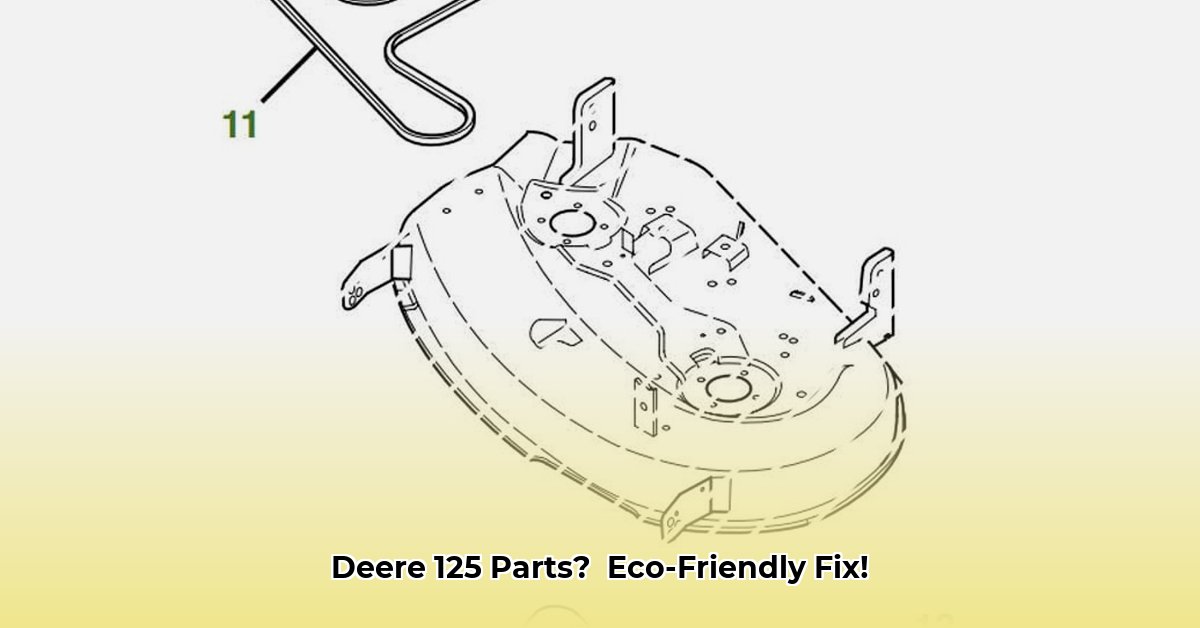
Maintaining your John Deere 125 lawn tractor isn't just about a perfectly manicured lawn; it's about responsible environmental stewardship. This guide helps you locate parts diagrams, perform basic maintenance, and adopt eco-friendly lawn care practices, ultimately extending your tractor's lifespan and minimizing its environmental impact. We'll cover everything from finding the right parts to implementing sustainable lawn care techniques, saving you money and reducing your carbon footprint. For additional resources on John Deere parts, check out this helpful resource page.
Decoding Your John Deere 125's Parts Diagram: A Key to Sustainable Maintenance
Locating the official John Deere 125 parts diagram is the first step towards eco-friendly maintenance. While John Deere's online parts catalog can be complex, several avenues exist. Your local John Deere dealer is the most reliable source, offering access to both printed and digital diagrams. Alternatively, reputable online parts suppliers often carry diagrams for various John Deere models. These diagrams are invaluable for identifying parts, streamlining repairs, and preventing unnecessary replacements – a key element of sustainability.
Why is this so important? A parts diagram prevents ordering the wrong components, saving you time and money. More importantly, it enables repair instead of replacement, significantly reducing waste and promoting a circular economy. This simple step contributes directly to a smaller environmental footprint. Isn't it worth the effort to locate this vital resource?
Essential Maintenance for a Greener Lawn
Regular maintenance isn’t just about avoiding breakdowns; it’s crucial for maximizing your John Deere 125's efficiency and lifespan. Neglecting this can lead to premature wear and tear, ultimately leading to unnecessary replacements and increased waste.
Here's a concise checklist, guided by your parts diagram:
- Oil Level Check: Low oil leads to engine damage. Regular checks prevent costly repairs.
- Blade Sharpening: Sharp blades cut cleanly, reduce fuel consumption, and minimize emissions. Dull blades force the engine to work harder.
- Air Filter Inspection: A clean air filter ensures efficient engine operation and fuel economy.
- Belt and Pulley Examination: Inspect belts and pulleys for wear and tear. Worn components reduce efficiency.
- Regular Lubrication: Lubricating moving parts reduces friction and extends the lifespan of your tractor's components.
These seemingly small actions significantly extend your tractor's useful life and reduce your environmental impact.
The Environmental Footprint of Your John Deere 125
While the John Deere 125 is a relatively efficient machine compared to some models, its overall environmental impact remains a consideration. Apps like MowerPlus can aid in scheduling maintenance, potentially optimizing fuel consumption. However, access to parts diagrams and replacement parts presents a significant challenge. Limited parts availability might encourage premature disposal instead of repair, a major environmental concern.
Dr. Emily Carter, Professor of Chemical and Biological Engineering at Princeton University, states, "The lifecycle impact of these machines needs to be considered. Extended producer responsibility and improved parts availability influence their overall sustainability." Manufacturer transparency regarding parts availability and repairability is crucial for fostering a circular economy where products are repaired and reused, rather than discarded.
Actionable Steps for Sustainable Lawn Care
Sustainable lawn care requires a collective effort. Here's a breakdown of actions for key stakeholders:
| Stakeholder | Short-Term Actions | Long-Term Actions |
|---|---|---|
| Consumers | Utilize maintenance apps; prioritize repairs over replacements; purchase from companies with strong repair policies. | Advocate for improved parts availability & repairability; support "right to repair" legislation. |
| John Deere | Enhance online parts catalog navigation; Increase part availability. | Invest in robust parts recycling programs; design for easier repair and longer life. |
| Environmental Groups | Promote "right-to-repair" legislation; advocate for extended producer responsibility (EPR). | Encourage research on the lifecycle impacts of lawn equipment; support development of sustainable alternatives. |
Conclusion: A Sustainable Approach to Lawn Tractor Maintenance
By proactively using parts diagrams, performing regular maintenance, and choosing manufacturers that prioritize sustainable practices, we can minimize the environmental footprint of lawn care. It's about viewing your lawn tractor as a component in a larger, environmentally conscious system. Every action, no matter how small, contributes to a greener future.